The Historic Trio on Lebuh Muntri, Georgetown, Penang
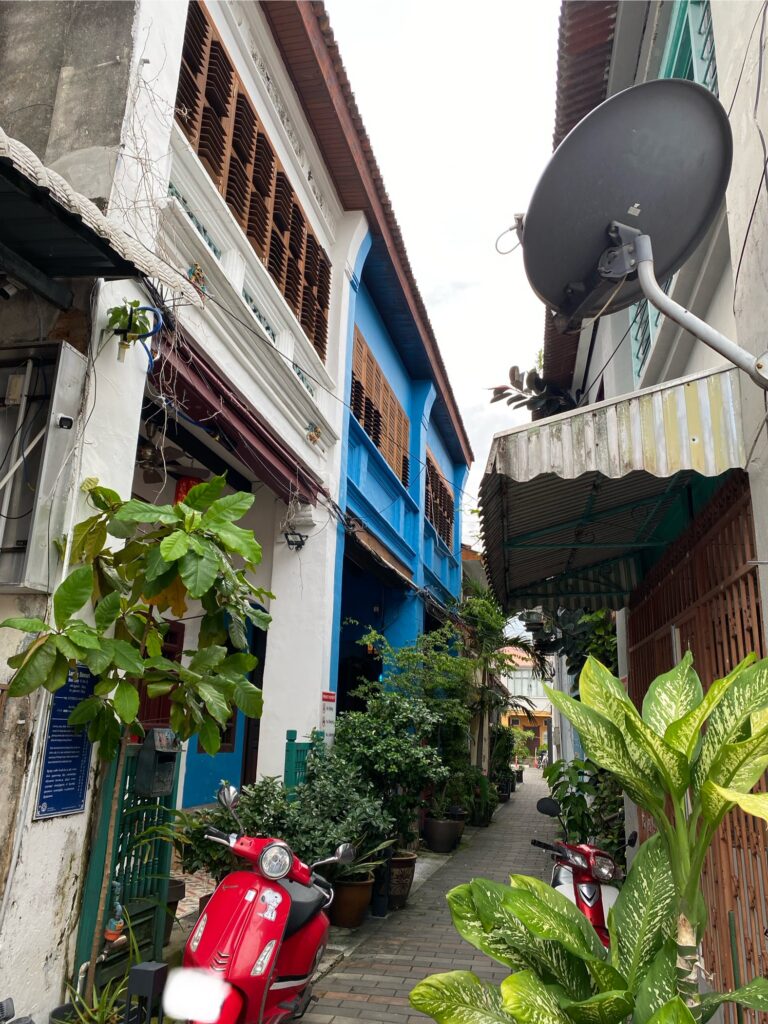
A slow walk down Lebuh Muntri feels like stepping into a quiet chapter of George Town’s past. The street is lined with rows of heritage shophouses, many of which have been lovingly refurbished into boutique hotels, cafés, restaurants, and small creative spaces. Despite their new purposes, these buildings still hold on to their original architecture and old-world ambience — timber windows, pastel facades, ornate plasterwork, and the gentle patina that only time can paint.
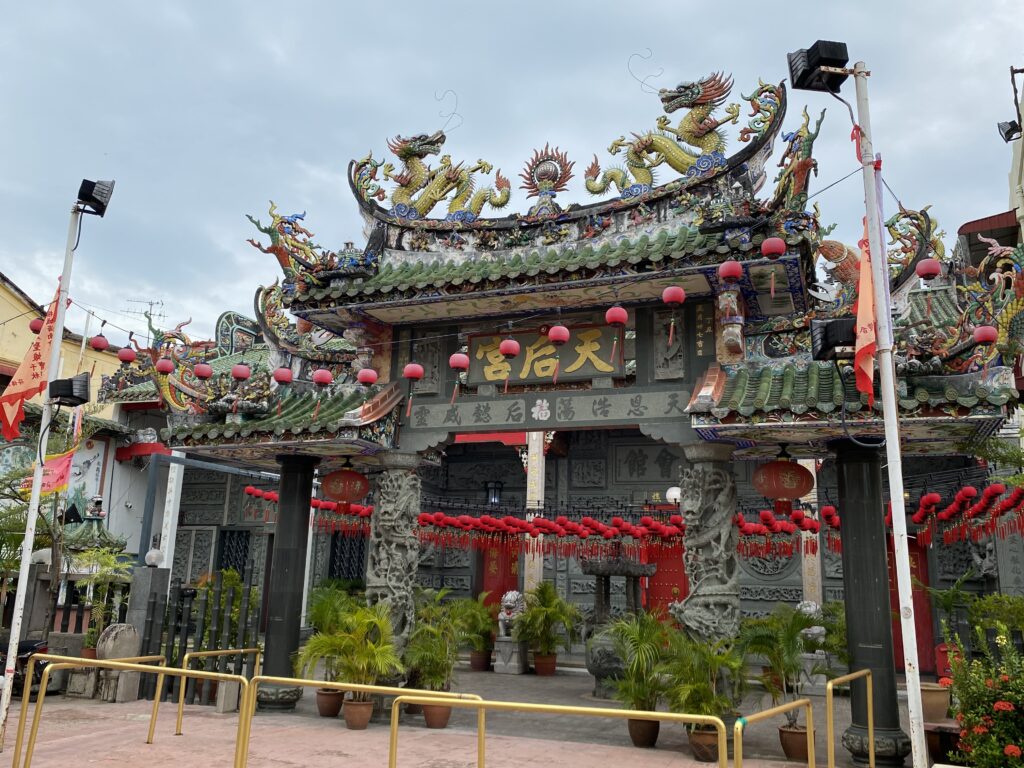
Along the way, three standout landmarks form what we call “The Historic Trio”. The first is the Hainan Thean Hou Temple (since 1895), rich with colours, carvings, and spiritual heritage.
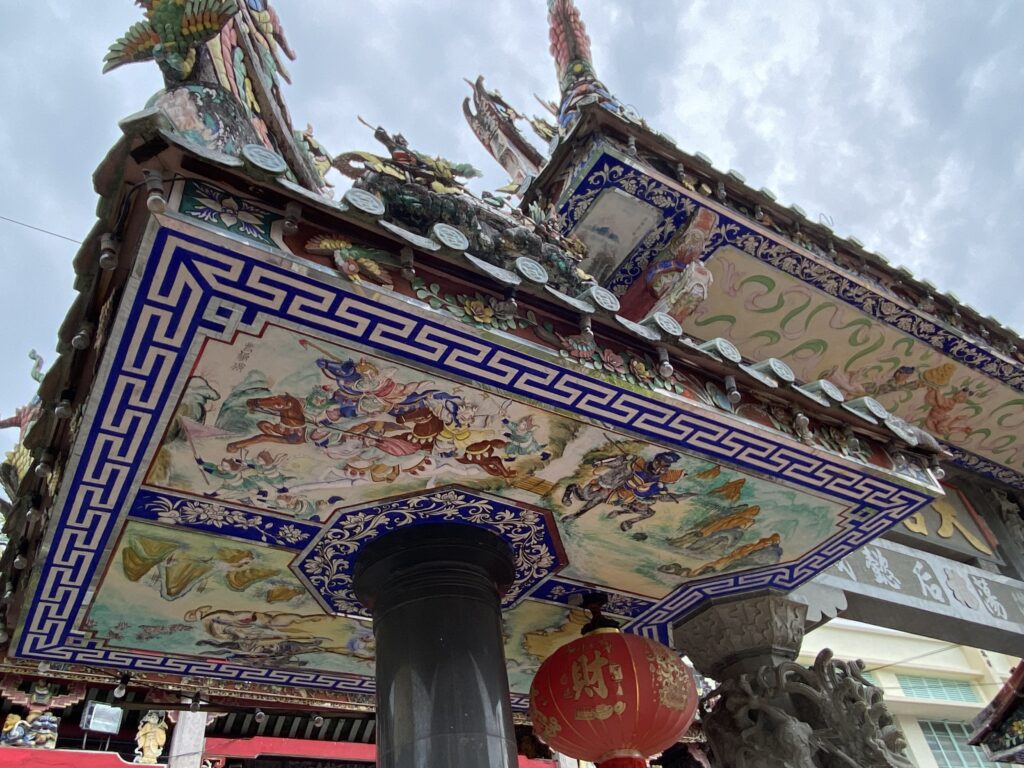
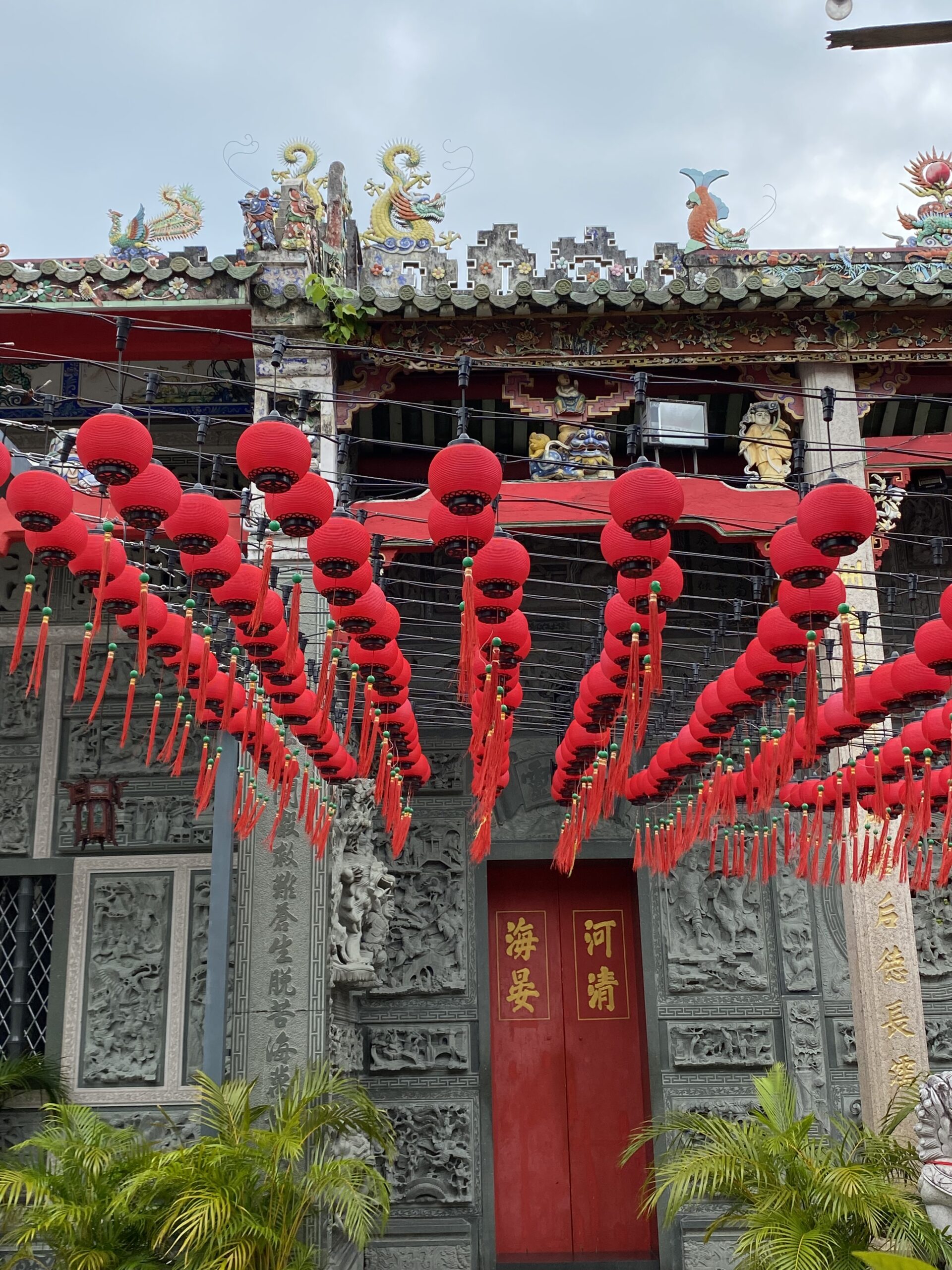
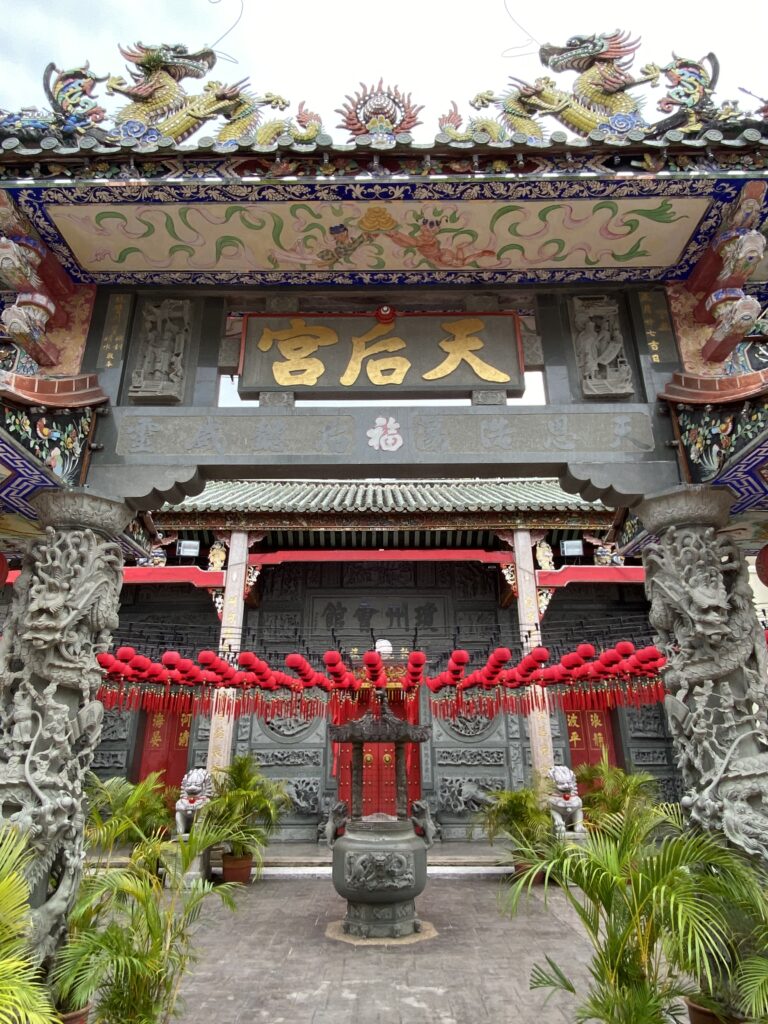
Tucked quietly along Muntri Street, the Hainan Thean Hou Temple greets visitors with an entrance that feels almost theatrical — a burst of colour, culture, and craftsmanship the moment you look up. The richly decorated rooftop, crowned with swirling dragons and intricate ceramic figurines, stands proudly against the Penang sky. Every tile, curve, and carving seems to tell its own story, shaped by hands that understood not just architecture, but tradition.
The façade is a blend of classic Southern Chinese temple design: sweeping green-tiled roofs, delicately painted beams, and pillars wrapped with stone dragons that appear almost alive. Red lanterns line the walkway in long, festive strings, glowing softly even in daylight, guiding visitors into the heart of the temple. Despite its busy details, the entire scene feels balanced — an artwork frozen in time, yet still pulsing with the prayers of the community that gathers here.
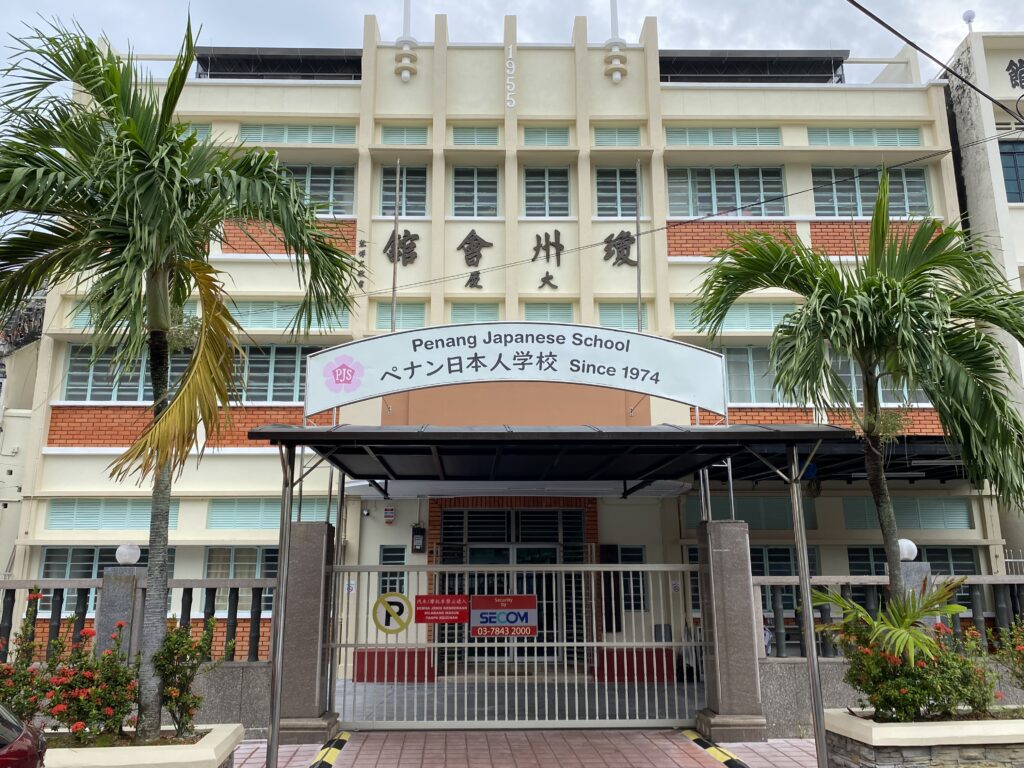
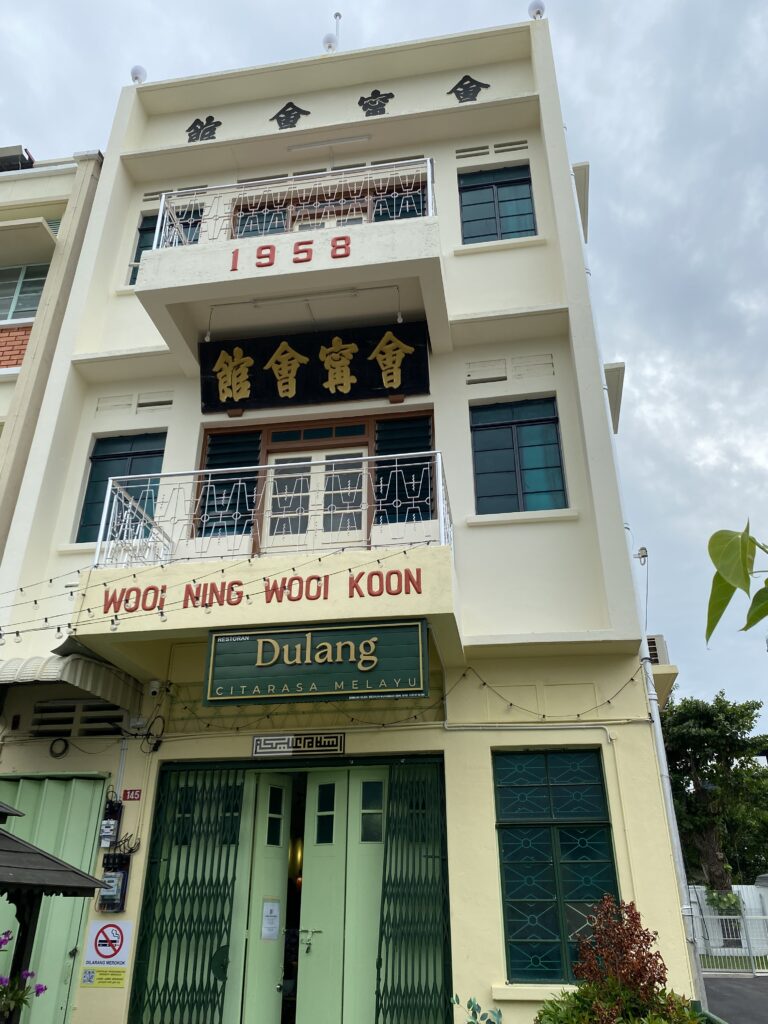
Next to the temple stands the former Qiongzhou Association, a clan house that accommodates the Penang Japanese School. Beside it, the former Wooi Ning Association now houses Dulang Citarasa Melayu on the ground floor, a special Malay restaurant, giving the building a new life while retaining its cultural shell.
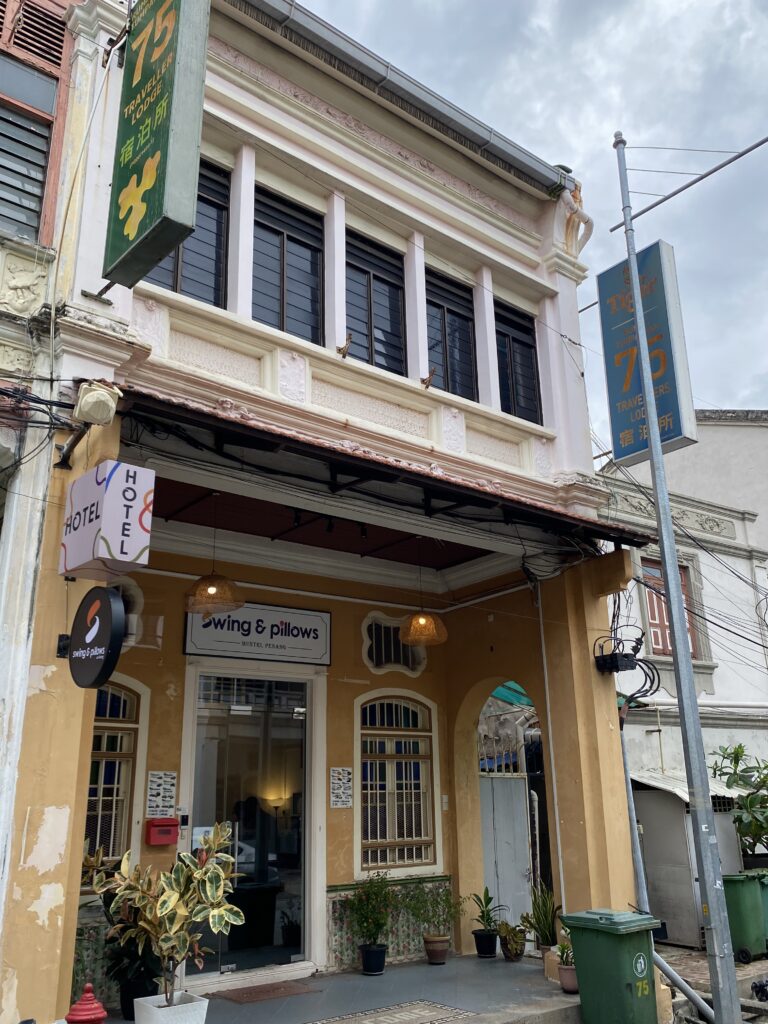
You’ll also find several small lodging hotels (such as ‘Swing & Pillows’ in the photo below) along Lebuh Muntri, each tucked neatly inside refurbished heritage shophouses. Staying in one of them gives you a glimpse into what life might have felt like in the centuries past — wooden floors that creak softly, tall shutters that open to the morning light, and an ambience that blends old-world charm with today’s comforts.
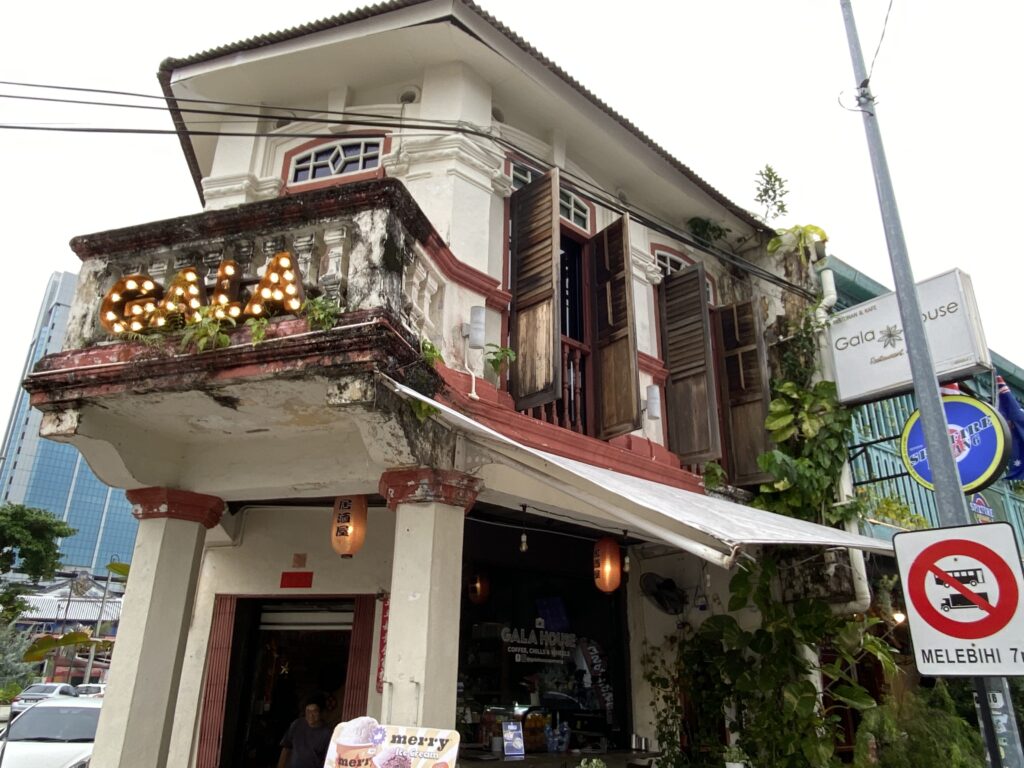
And right at the beginning of Lebuh Muntri sits Gala House, a long-established café that many visitors stumble upon before their walk even begins. It’s a cosy spot where you can enjoy your favourite snacks with a warm cup of coffee, all while watching the rhythm of the street outside. The ambience, paired with the heritage surroundings, makes it an inviting place to pause and soak in the charm that makes Lebuh Muntri so captivating.
Upon recharging, as you continue toward the end of Lebuh Muntri, the street will guide you into Lebuh Stewart, another heritage-rich stretch filled with narrow lanes, traditional shophouses, and glimpses of George Town’s layered history. Walk a little further, and you’ll soon arrive at one of Penang’s most iconic landmarks — the Goddess of Mercy Temple, still standing proudly as a place of prayer, culture, and community after centuries.
Further Reading
If you enjoy exploring Penang’s quieter heritage streets, Lebuh Muntri naturally leads you to more discoveries. Lebuh Stewart, Love Lane, and Chulia Street each offer their own blend of culture, architecture, and local life — from clan houses and old temples to small cafés and hidden courtyards. You may also want to explore the many heritage shophouses around the area, each with its own story of restoration and adaptive reuse.
For those fascinated by Penang’s temple architecture, the Hainan Thean Hou Temple is just one of several landmark temples around George Town. The nearby Goddess of Mercy Temple, Cheah Kongsi, and Yap Kongsi continue to showcase the deeply rooted traditions of the early Chinese communities. And if you’re a fan of small, character-filled streets, walking further toward Armenian Street will reveal more murals, galleries, and charming corners to wander through.
How to Get There
By Car:
Lebuh Muntri is located in the heart of George Town’s heritage zone. Parking can be limited along the street, but paid parking spaces are available around Love Lane, Chulia Street, and Penang Road.
By Bus:
Take Rapid Penang buses that pass through Chulia Street or Penang Road. From there, it’s just a short walk into Lebuh Muntri. (bus numbers: 101, 104, 11)
By Foot:
If you’re already exploring George Town’s heritage core, Lebuh Muntri is easily reachable on foot from Love Lane, Chulia Street, or Upper Penang Road.
What to See Nearby
• Goddess of Mercy Temple – One of Penang’s oldest and most important temples.
• Love Lane – A narrow street filled with boutique hotels, cafés, bars, and a lively mix of architecture.
• Chulia Street – A well-known street offering food, history, and heritage spots.
• Penang State Museum – A short walk away, showcasing Penang’s diverse cultural past.
• Stewart Lane & Small Heritage Lanes – Ideal for slow walks and photography.
• Armenian Street – Famous for murals, galleries, and traditional craft shops.
More About Hainan Thean Hou Temple
The Hainan Thean Hou Temple, or “Thean Hou Kong,” began its story back in 1870, when the early Hainanese settlers built a small temple at Lebuh Gereja. As their community grew, so did the temple’s importance. In 1895, it was moved to the present site, where it still stands today as a cultural anchor for the Hainanese clan in Penang.
Dedicated to Mazu, the protective goddess of seafarers, the temple became a spiritual refuge for Hainanese migrants who crossed the sea in search of opportunity. The temple carried their hopes, fears, and gratitude — a place to thank the goddess for safe journeys and to pray for good fortune in unfamiliar lands.
Two unique relics from the old temple were brought along to the new site: the ancient Altar of Kwan Kong and the stone pillars carved during the Song Dynasty — both symbols of loyalty, courage, and protection. These elements helped preserve the temple’s lineage, connecting generations of worshippers to their roots.
In 1995, the temple underwent a major restoration to celebrate its centenary. The façade was given a fresh breath of life, adorned with the vibrant roof sculptures and detailed ornamentation seen today. Though restored, the temple never lost its soul — it remains a quiet reminder of Penang’s multicultural heritage, shaped by people who arrived with little but carried strong traditions across the sea.
FAQ
1. What is special about Lebuh Muntri?
Lebuh Muntri is known for its concentration of beautifully preserved heritage shophouses, small hotels, and historic clan buildings.
2. Are the buildings here all refurbished?
Many have been restored into boutique hotels, cafés, and cultural spaces while keeping their original architecture and atmosphere.
3. Is Lebuh Muntri a good place for photography?
Yes — the mix of restored heritage façades, temples, and charming small lanes makes it a favourite among photographers.
4. Can I walk from Lebuh Muntri to the Goddess of Mercy Temple?
Absolutely. Just continue to Lebuh Stewart, and you’ll reach the famous temple within minutes.
5. What types of accommodation are found here?
You’ll find small, charming lodging hotels housed inside restored shophouses, giving guests a nostalgic “old Penang” experience.


Post Comment